Skip to content
Flsfunnelone

Flsfunnelone

NTFS Drives In MacOS

  • Home
  • About Us
  • NTFS Drives In MacOS
  • Say Hi..

Month: October 2025

  • Home
  • 2025
  • October

Essential Laboratory Equipment From Lab Alliance for Reliable Testing

Protect Your Mobile Lucille Bennett

Lab Alliance supplies precision pipettes and controllers, benchtop and high‑speed centrifuges, validated consumables (tips, tubes, plates), calibrated refrigeration and incubation units, and certified safety apparel. Each item is selected for measurable performance: volume accuracy laballiance sdn bhd, RCF delivery, material purity, temperature stability, and protective integrity. Emphasis is on traceable calibration, documented maintenance, and supplier quality data to reduce variability and contamination risk. Further information outlines selection criteria, validation protocols, and support options for implementation.

About Us - Lab Alliance

Precision Pipettes and Pipette Controllers

Precision pipettes and pipette controllers provide controlled, repeatable liquid handling essential for quantitative assays, titrations, and sample preparation. The equipment is evaluated by measurable metrics: volume accuracy, precision, and dead-volume reduction. Ergonomic design reduces operator fatigue and variability, improving reproducibility across runs. Calibrated instruments and traceable procedures guarantee results meet specification limits and regulatory expectations https://laballiance.com.my/. Materials and tip fit minimize cross-contamination and carryover, while maintenance schedules sustain performance. Selection criteria prioritize adjustable ranges, drift characteristics, and compatibility with lab workflows. Documentation of calibration, validation data, and error rates enables confident method transfer and sustained analytical control.

Benchtop and High-Speed Centrifuges

Benchtop and high-speed centrifuges separate sample constituents by applying controlled centrifugal force, with performance defined by maximum relative centrifugal force (RCF), rotor capacity, imbalance tolerance, and run-to-run reproducibility. Selection prioritizes measured RCF delivery, certified rotor types, and documented temperature stability. Maintenance protocols emphasize calibration of speed sensors and routine imbalance detection. Operational controls include programmable acceleration/deceleration profiles, sealed rotor buckets for biosecurity, and measurable noise/vibration thresholds. Applications demand matching rotor geometry to tube format and payload to rated capacity to prevent failures. Procurement criteria focus on validated performance data, serviceability, and clear specification of high speed capability.

Essential Consumables: Tips, Tubes, and Plates

In laboratory workflows, consumables such as pipette tips, microcentrifuge tubes, and microplates constitute critical interfaces between samples and instruments, where material composition, dimensional tolerances, and manufacturing quality directly affect accuracy, contamination risk, and assay reproducibility. Selection criteria prioritize low-binding polymers, certified RNase/DNase-free status, lot-traceable sterility, and dimensional conformity to automated systems. Disposable reservoirs optimize reagent handling and reduce cross-contamination when paired with validated sealing. Filter mats protect detection optics and prevent aerosol transfer in plate-based assays. Inventory control, single-use policies, and vendor quality documentation support chain-of-custody and consistent analytical performance.

Laboratory Refrigeration and Incubation Equipment

Proper storage and controlled temperature environments underpin the integrity of samples and reagents introduced through consumables like tips, tubes, and plates. Laboratory refrigeration and incubation equipment are specified with measurable performance: temperature uniformity, stability, and documented cold storage capacity. Selection prioritizes calibrated units, alarmed monitoring, and service traceability. Incubator validation protocols confirm setpoint accuracy, CO2 control where applicable, and decontamination procedures. Operational SOPs mandate logging, preventive maintenance, and corrective action thresholds. Equipment choices balance capacity, recovery time, and energy efficiency to maintain chain-of-custody and reproducibility, enabling controlled conditions that support reliable analytical outcomes.

Safety and Personal Protective Equipment

The section outlines required protective clothing—lab coats, gloves, and chemical-resistant gowns—matching material specifications to hazard types and standard protocols. It then addresses eye and respiratory protection, specifying selection criteria such as impact ratings, splash resistance, and assigned protection factors for respirators. Recommendations reference regulatory guidance and empirical performance data to support equipment choice and implementation.

Protective Clothing Essentials

One essential layer of laboratory safety, protective clothing minimizes exposure to chemical, biological, and physical hazards through engineered materials and standardized design features. Protective clothing selection follows hazard assessment, matching fabric type, seam integrity, and closures to task risk. Chemical resistant aprons provide targeted torso protection against splashes and corrosives; full-body suits distribute barrier performance for airborne or liquid hazards. Anti static garments reduce ignition risk when working with flammable solvents or powders. Inspection, fit testing, and laundering/disposal protocols guarantee continued performance. Documentation of selection criteria, maintenance schedules, and replacement triggers supports reproducible, auditable safety outcomes in controlled laboratory environments.

Laboratory Images – Browse 6,039,713 Stock Photos, Vectors, and Video |  Adobe Stock

Eye and Respiratory Protection

In laboratory environments where particulate, vapour, and impact hazards coexist, eye and respiratory protection form complementary barriers that reduce exposure through engineered filtration, splash-resistant facepieces, and impact-rated eyewear. Selection follows risk assessment: match chemical respirators to airborne agents using assigned protection factors and cartridge compatibility tables; verify fit with quantitative or qualitative testing. Anti fog goggles prevent vision impairment during prolonged procedures and must meet splash and impact standards. Maintenance protocols prescribe inspection, decontamination, filter replacement schedules, and storage hygiene. Training documents donning, doffing, seal checking, and emergency procedures. Compliance is audited against regulatory and institutional exposure limits.

Calibration, Maintenance, and Vendor Support

For laboratories relying on sensitive instrumentation, regular calibration and preventative maintenance form the foundation of data integrity and operational safety. The laboratory adopts systematic schedules for equipment qualification, traceable standards, and documented acceptance criteria. Vendor-provided service contracts supplement internal capability, ensuring timely repairs, parts availability, and validated software updates. Performance metrics, deviation reports, and audit-ready logs support reproducibility and regulatory compliance. Decision protocols prioritize critical assets by risk and downtime impact. Procurement emphasizes vendors with certified technicians, rapid response times, and clear escalation paths. This controlled, evidence-based approach minimizes uncertainty, extends asset life, and preserves analytical accuracy.

Conclusion

Lab Alliance’s equipment portfolio underpins reproducible, high-quality laboratory results through validated precision tools and reliable support systems. Methodical selection of calibrated pipettes, centrifuges, consumables, and controlled refrigeration/incubation minimizes analytical variability. Consistent maintenance, documented calibration, and adherence to PPE protocols further reduce risk and guarantee regulatory compliance. Together, these elements form an evidence-based framework that enables laboratories to sustain accuracy, efficiency, and safety across routine testing and high-throughput workflows.

Share this...
Share on facebook
Facebook
Share on pinterest
Pinterest
Share on twitter
Twitter
Share on linkedin
Linkedin
…
October 5, 2025October 8, 2025

How Smart Glass Enhances Workplace Privacy Without Compromising Design

Protect Your Mobile Lucille Bennett

Smart glass provides on-demand visual privacy in open-plan offices by switching optical states electronically. It maintains daylight, crisp sightlines, and consistent material appearance while offering rapid, programmable opacity for meetings, focus zones, and receptions. Slim, modular panels and discreet controls preserve millwork continuity and sightline composition. Integrated controls and BMS links optimize glare, solar gain smart glass, and HVAC load. Specified service access, cleaning protocols, and warranties secure long-term performance — continue for implementation details and specs.

Privacy in the Modern Office: Why It Matters and How Smart Glass Can Help

What Is Smart Glass and How Does It Work

At the core, smart glass is an electro-optical glazing that changes its light transmission properties in response to an electrical signal, enabling on-demand control of transparency, tint, or opacity. It operates via electrochromic operation for graduated tinting or via suspended particleview systems for rapid switching between clear and dark states. Specifications emphasize switching speed smart glass windows, optical haze, visible light transmission, power draw and lifecycle cycles. Integration options include wired control panels, building automation protocols, and laminated safety glass. The tone is minimalist and liberating: occupants gain visual autonomy without fixed partitions, preserving spatial openness while granting selective seclusion.

Privacy Benefits for Open-Plan Offices

Smart glass enables instant visual privacy by switching glazing from transparent to opaque on demand, supporting secure meetings and focused work without physical barriers. It permits flexible space zoning through programmable zones and dynamic timelines, allowing planners to reconfigure layouts without construction. Integration preserves aesthetic continuity by maintaining consistent glass lines, finishes, and minimal hardware while delivering privacy function.

Instant Visual Privacy

Often implemented through switchable glass or electronically dimmable films, instant visual privacy provides immediate control over sightlines in open-plan offices. It enables occupants to toggle transparency on demand, balancing openness with seclusion. Specifications emphasize response time, haze levels, and power consumption; Adaptive dimming profiles can be programmed per zone for task-dependent opacity. Integration with Privacy glasslamination offers laminated safety and consistent optical performance when activated. Control interfaces range from simple switches to networked building systems, preserving design minimalism while granting personal freedom. Maintenance, lifecycle, and glazing U-values are considered in procurement to guarantee performance without compromising aesthetics.

Flexible Space Zoning

Through adaptable partitions, furniture, and glazing, flexible space zoning transforms open-plan offices into configurable privacy layers that support varied work modes without permanent construction. It specifies modular zoning strategies combining smart glass panels, movable screens, and furniture clusters to delineate focus, collaboration, and respite areas. Smart glass integrates with acoustic partitioning to control sightlines while preserving openness; switching opacity aligns visual privacy with sound-mitigating elements. Systems emphasize rapid reconfiguration, minimal fixings, and clear performance criteria for daylight, sightlines, and decibel reduction. The result is a freedom-oriented toolkit that enables tenants to tailor privacy levels to task requirements without sacrificing spatial agility.

Bright, Adaptable, and Private: The Power of Smart Glass in Offices

Maintain Aesthetic Continuity

When integrated as a coordinated layer, switchable glazing preserves the visual language of an open-plan interior while delivering discrete privacy. It enables seamless shifts between transparent and translucent states, maintaining color harmony with finishes and furnishings. The specification-focused approach prioritizes sightline control without fragmenting the design, supporting a liberated workplace ethos.

  • Modular glazing assemblies that align with architectural rhythms
  • Finish palettes calibrated for consistent color harmony across materials
  • Control systems programmed for predictable, user-driven seamless shifts

The result is an unobtrusive privacy strategy that respects composition, invites movement, and sustains visual freedom.

Design-Friendly Integration and Aesthetics

In blending smart glass into work environments, design-friendly integration prioritizes minimal visual disruption, straightforward installation, and alignment with existing architectural systems. Specifications favor slim profiles, standardized mounting, and modular panels that permit quick retrofits. Color matching options and seamless frames maintain material continuity with millwork and glazing. Controls discreetly recess into ceilings or tabletops, preserving sightlines and occupant autonomy. Cable routing conforms to building standards; HVAC and fire-safety interfaces remain unobstructed. Maintenance access is defined in project drawings. The approach enables designers and occupants to choose privacy models without sacrificing compositional intent, flexibility, or future reconfiguration.

Energy Efficiency and Comfort Advantages

Smart glass systems reduce HVAC load by dynamically modulating solar gain, lowering peak cooling demand and enabling smaller capacity specifications. Integrated electrochromic or PDLC layers control glare and transmitted heat without mechanical shading, preserving daylight while maintaining visual comfort metrics. Specifying smart glazing with control algorithms tied to building management systems optimizes energy profiles and occupant comfort simultaneously.

Reduced HVAC Load

By modulating solar gain and glare transmission through electrochromic glazing, smart glass directly reduces HVAC cooling and heating demands. It delivers measurable HVAC savings and enables peak shaving strategies without altering aesthetics. Performance-focused specification highlights operational freedom, lower energy bills, and simplified mechanical sizing.

  • Reduced thermal load: lowers continuous HVAC runtime, extends equipment life.
  • Peak shaving capability: trims demand charges during critical hours.
  • Integrated controls: coordinates with BMS for automated setpoint optimization.

Design teams gain predictable metrics for energy models. Occupant comfort is preserved while mechanical systems downsize, freeing budget and spatial allocation for other design priorities.

Glare and Heat Control

Having reduced HVAC loads, the glazing can further optimize occupant comfort and energy use through targeted control of solar glare and radiant heat. Smart glass provides adjustable solar shading calibrated to daylight needs, cutting glare without fixed blinds. Specifications prioritize visible light transmittance, glare index reduction, and U-value improvements for predictable thermal management. Integration with building controls enables scene-based tinting, preserving views while moderating incident solar gain. Designers specify response times, durability cycles, and failure modes to maintain freedom of use and minimal maintenance. Performance documentation guides commissioning, ensuring measurable reductions in cooling demand and enhanced occupant visual comfort.

Use Cases: Meeting Rooms, Focus Areas, and Reception Spaces

Across common workplace zones—meeting rooms, individual focus areas, and reception spaces—privacy requirements differ in scale, intent, and enforcement mechanisms. Smart glass adapts sightlines and supports acoustic privacy objectives without fixed partitions. In meeting rooms it enables confidential sessions while preserving daylight. In focus areas it balances visual seclusion with environmental control for concentrated work. At reception it integrates visitor management with transient transparency states.

  • Meeting rooms: controlled opacity, AV sync, acoustic privacy layering
  • Focus areas: rapid shifts, minimal visual distraction, daylight retention
  • Reception: identity framing, temporary concealment, welcoming sightlines

Implementation Considerations and Maintenance

When integrating smart glass into workplace environments, careful alignment of electrical infrastructure, control systems, and acoustic treatments is essential to meet performance specifications and maintenance budgets. Implementation planning prioritizes installation scheduling to minimize operational disruption, specifying load calculations, conduit paths, and control hubs. Serviceability is defined in room-level diagrams and spare-part lists; warranties, remote diagnostics, and firmware update paths reduce downtime. Cleaning protocols balance surface care with longevity—approved agents, microfiber techniques, and access windows are documented. Maintenance contracts outline response times, periodic inspections, and performance verification. The result is a flexible privacy solution that preserves design intent and occupant autonomy.

Conclusion

Smart glass delivers adjustable privacy without sacrificing aesthetic intent, marrying form and function for contemporary workplaces. Its electrochromic and PDLC options provide on-demand opacity, enhancing confidentiality in open-plan layouts, meeting rooms, and focus zones while supporting daylighting and HVAC efficiency. Seamless integration with interior specifications preserves sightlines and material coherence. Consider wiring, control protocols, acoustic needs, and maintenance schedules to guarantee performance longevity and effortless operation aligned with design standards.

Share this...
Share on facebook
Facebook
Share on pinterest
Pinterest
Share on twitter
Twitter
Share on linkedin
Linkedin
…
October 3, 2025October 6, 2025

Rev Interactive and the Rise of Interactive LED Video Walls in Shopping Malls

Protect Your Mobile Lucille Bennett

Rev Interactive champions a shift from static signage to interactive LED video walls that convert mall attention into measurable commerce. Their installations combine modular LED panels, sensor arrays, and edge-enabled media servers to enable touch and gesture interactions LED panel, live inventory checks, and QR-driven offers. Designs prioritize brand consistency, scalability, and privacy-conscious analytics that link dwell and engagement to conversion metrics. Strategic placements boost footfall, dwell-to-purchase rates, and tenant revenue. Explore what follows to learn implementation, metrics, and case studies.

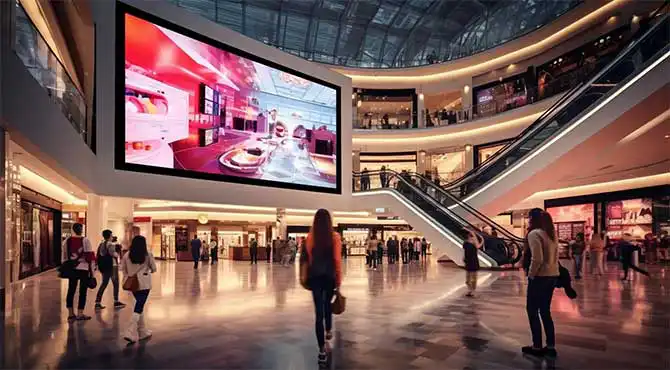
Indoor LED Advertising Screen Display for Shopping Mall Solution

The Evolution of Retail Displays: From Static Signage to Interactive LED Walls

How did retail displays evolve from simple billboards to dynamic, responsive interfaces? The narrative charts a pragmatic shift: static signage yielded to modular, data-driven installations that prioritize choice and autonomy. Brands pursued adaptability, deploying interactive kiosks to offer on-demand information, seamless transactions, and personalized navigation. Visual merchandising integrated motion and intelligence; digital mannequins replaced rigid forms, simulating outfits LED display board Malaysia, sizes, and scenarios to empower shoppers to control discovery. This evolution served strategic goals—higher conversion, richer analytics, and resilient brand presence—while preserving an illusion of effortless freedom for consumers. Implementation emphasized scalability, consistent identity, and measurable return. The result: retail environments that relinquish one-way broadcasting in favor of responsive, user-directed experiences aligned with contemporary expectations.

How Interactive LED Video Walls Enhance Shopper Engagement

Interactive LED video walls transform passive browsing into active brand encounters by enabling real-time product interaction that lets shoppers explore features and availability on the spot. They drive dwell time and social sharing through gamified mall experiences that reward engagement and create memorable touchpoints. Coupled with data-driven personalization, these walls deliver targeted promotional content that increases conversion and strengthens brand relevance.

Real-Time Product Interaction

One clear advantage of real-time product interaction on LED video walls is the ability to convert passive browsing into active engagement by letting shoppers request information, customize options, and see instant visual feedback. The technology empowers visitors to explore touch responsive catalogs and execute live stock checks without staff assistance, reinforcing autonomy and speed. Brands gain immediate conversion signals as users manipulate colors, sizes, and configurations, then reserve or buy on the spot. Data from interactions informs merchandising and inventory strategies, sharpening assortment and placement decisions. Installations project a confident brand tone that values convenience and choice, lowering friction in the purchase journey. In this way, interactive walls become direct sales channels and strategic insight engines for retailers seeking liberated, efficient customer experiences.

Gamified Mall Experiences

Transforming passive corridors into playful destinations, gamified LED video walls drive foot traffic and dwell time by turning brand messages into measurable experiences. The technology reframes mall navigation as choice‑driven exploration, inviting visitors to engage with an interactive scavenger trail that rewards discovery and social sharing. Brands deploy timed challenges, leaderboards, and reward triggers while preserving shopper autonomy, encouraging voluntary participation rather than interruption. Data capture focuses on aggregate engagement metrics and opt‑in behaviors, informing strategic placements and campaign cadence. Integrated augmented storefront activations extend play into retail facades, linking exterior spectacle with in‑store conversion opportunities. The approach balances spectacle with purpose: concise mechanics, clear rewards, and scalable formats that reinforce brand identity and accelerate purposeful, freedom‑minded retail interactions.

Personalized Promotional Content

Leverages real‑time data and contextual cues to deliver targeted promotions that resonate with individual shoppers, increasing relevance and conversion without interrupting the visit. Personalized promotional content on interactive LED video walls adapts offers based on location, time, and user signals, enabling seamless activation of dynamic pricing and limited-time rewards. Messaging aligns with brand tone while preserving shopper autonomy, offering opt-in experiences and tailored incentives that respect movement and choice. Integrations with loyalty systems and curated playlists deepen emotional connection, syncing visuals and audio to motivate exploration. Measured through engagement metrics and conversion lift, the approach reduces wasted impressions and elevates perceived value. The result is a scalable, freedom-forward retail tool that drives measurable sales and strengthens brand affinity.

Indoor LED Display - Reissdisplay

Technical Components Behind Rev Interactive’s Installations

Several integrated systems form the backbone of Rev Interactive’s LED video wall installations, combining high-resolution LED panels, modular mounting frames, industry-grade media servers, and synchronized control software to deliver reliable, scalable experiences across shopping malls. The technical stack pairs sensor arrays with modular controllers to translate foot traffic and gestures into responsive content, while redundant power supplies and thermal management guarantee uptime. Networked content distribution uses edge caching and secure protocols for remote updates and analytics collection. Calibration rigs and automated diagnostics maintain color uniformity and pixel integrity with minimal on-site intervention. Integration APIs connect loyalty platforms and ad servers, enabling targeted messaging. The result is a resilient, extensible platform that empowers brands and preserves visitor autonomy.

Design Principles for Creating Memorable Mall Experiences

By prioritizing clarity of purpose and audience, designers guarantee each LED-driven installation performs a specific role—wayfinding, brand storytelling, or engagement—rather than merely filling space. Design principles focus on legible visual hierarchies, intuitive interaction zones, and durable materials that respect flow without imposing. Strategic use of ambient lighting and contrast sculpts mood while conserving shopper autonomy, enabling discovery without disruption. Sensory wayfinding pairs subtle audio cues and tactile markers with dynamic visuals to guide movement naturally. Content rhythms are calibrated to attention cycles, offering layered experiences for quick passes or lingering engagement. Brand expression remains disciplined: bold, memorable moments that affirm identity yet yield to the mall’s communal character, preserving freedom of movement and choice.

Measurable Marketing Benefits and Data-Driven Insights

Interactive LED video walls provide quantifiable uplifts in engagement and dwell time by attracting attention and encouraging longer visits in targeted zones. Integrated sensors and analytics platforms enable precise conversion tracking metrics, linking on-screen interactions to store visits, coupon redemptions, or online actions. Brands can translate these data streams into optimised content schedules and measurable ROI for mall campaigns.

Engagement and Dwell Time

When effectively deployed, LED video walls drive measurable increases in engagement and dwell time by creating visually compelling touchpoints that attract passersby and encourage longer interactions. The technology enables precise audience analytics, revealing which creative formats, placements, and times yield the highest attention and linger rates. Mall operators and brands can apply sensory zoning to design pathways that guide movement, extend stay, and cultivate moments of discovery without feeling intrusive. Data-fed content strategies prioritize freedom‑oriented messaging that empowers shoppers while respecting their space. Performance dashboards translate dwell patterns into actionable recommendations for content rotation, sequencing, and location strategy. In this way, interactive LED installations become strategic assets that amplify brand presence, elevate shopper experience, and justify investment through observable engagement gains.

Conversion Tracking Metrics

Measure conversion tracking metrics to link LED video wall performance directly to sales and marketing outcomes. The brand evaluates conversion attribution through integrated sensors, QR interactions, and point‑of‑sale tie‑ins to quantify influence without constraining visitor experience. Metric dashboards synthesize real‑time engagement, incremental sales lift, and campaign ROI for clear decisioning. Strategic reporting empowers teams to optimize creative freedom while protecting revenue goals.

  1. Footfall correlation: map wall interactions to store entries.
  2. QR/code scans: capture intent and promotional redemption.
  3. Dwell-to-purchase: calculate probability uplift per minute.
  4. Cross-channel attribution: reconcile in-store display impact with online conversions.

This concise, data-first approach delivers measurable insights, enabling liberated brand choices grounded in accountable performance.

Case Studies: Transformative Installations in Major Malls

Across several flagship projects, leading malls have leveraged LED video walls to redefine customer engagement, drive foot traffic, and elevate brand positioning. Case studies highlight installations that blend bold brand storytelling with measurable outcomes: a metropolitan mall used large-scale interactive displays to boost dwell time and sales conversions while integrating sustainability initiatives through energy-efficient panels and timed brightness controls. Another regional center partnered with local artists and retailers, using dynamic canvases to amplify community partnerships and seasonal programming, yielding increased event attendance. A luxury complex targeted personalized experiences, enabling opt-in promotions and loyalty integration that reinforced premium perception. Each example demonstrates strategic alignment between technology, commercial goals, and visitor autonomy, offering repeatable models for malls seeking liberated, high-impact experiences.

Implementation Considerations and Future Trends for Malls

Building on real-world outcomes, consideration of implementation and future trends requires alignment of technical specs, commercial objectives, and guest experience design. Stakeholders evaluate deployment timelines, integration with mall systems, and vendor SLAs while prioritizing adaptability to evolving content and privacy-conscious visitor analytics.

  1. Site selection: sightlines, power, and footfall patterns.
  2. Integration: POS, Wi‑Fi, and CRM for targeted campaigns.
  3. Operations: maintenance planning, spare parts, and remote diagnostics.
  4. Experience: modular content, accessibility, and opt‑in data capture.

The tone is strategic and brand‑focused: installations must liberate marketers to experiment, enable tenants to convert attention into sales, and allow guests to feel autonomous in interaction. Future trends emphasize modular hardware, edge AI for real‑time insights, and subscription models for continual innovation.

Frequently Asked Questions

How Do Interactive LED Walls Impact Mall Insurance and Liability Coverage?

Interactive LED walls increase insurance implications and liability exposure by introducing equipment, cyber, and third‑party risks; risk transfer, stricter safety protocols, specialized endorsements, and clear vendor contracts protect brand freedom while controlling financial and reputational downside.

What Training Is Required for Mall Staff to Operate These Installations?

Operator training should cover hardware operation, safety protocols, content management systems, troubleshooting, and emergency shutdowns. Staff receive brand-focused modules, hands-on practice, certification, and autonomy-enhancing refreshers to guarantee confident, compliant independent operation.

Are There Health Concerns From Prolonged Exposure to Bright LED Walls?

Prolonged exposure can cause eye strain and increased blue light effects; the brand recommends strategic brightness limits, timed breaks, and shielding options so staff and visitors retain visual freedom while maintaining immersive, safe mall experiences.

Can Small Retailers Rent Time on a Mall-Wide Interactive Wall?

Yes. The retailer can rent slots; malls offer pop up leasing and time sharing on interactive walls. The brand secures targeted exposure, flexible booking, measurable ROI, and autonomy to craft short campaigns that amplify foot traffic and identity.

What Are the Accessibility Features for Visually or Hearing-Impaired Shoppers?

They provide audio description, captioning, volume control, and tactile signage; wayfinding updates and high-contrast visuals support independence. The brand prioritizes customizable accessibility settings so shoppers with hearing or visual impairments experience freedom and equal engagement.

Conclusion

Rev Interactive’s interactive LED video walls redefine mall environments by blending technology, design and data to drive engagement and measurable retail outcomes. Strategically deployed, these installations transform passive spaces into branded experiences that attract foot traffic, extend dwell time and deliver actionable consumer insights. With robust technical frameworks and thoughtful UX, malls gain a scalable tool for curated storytelling and targeted campaigns. Future-forward retailers and landlords adopting this approach will secure competitive relevance and heightened commercial returns.

Share this...
Share on facebook
Facebook
Share on pinterest
Pinterest
Share on twitter
Twitter
Share on linkedin
Linkedin
…
October 3, 2025October 6, 2025

Top Mistakes to Avoid When Using Rat Repellents

Protect Your Mobile Lucille Bennett

Common mistakes include relying on unproven DIY repellents instead of tested products, neglecting sanitation and food sources, and overlooking structural entry points that render repellents ineffective. Users often misplace or overuse ultrasonic devices rat repellent spray, mix incompatible treatments, and assume one product fits all rat species and situations. They expect immediate results, skip regular monitoring and maintenance of traps or bait, and delay professional assessment. Continue for practical steps and corrective measures that improve success.

How to Keep Rats Away: The Ultimate Guide to Rat Repellent

Relying on Unproven DIY Repellents Instead of Evidence-Based Options

Often, homeowners turn to homemade mixtures and folk remedies for rat control, but these untested approaches frequently fail to deter infestations. The text observes that reliance on homemade scent myths and anecdotal testimonials diverts effort from validated solutions https://igreenasia.com/. Professionals note that DIY concoctions lack standardized dosing, repeatable outcomes, and peer-reviewed efficacy, making them unreliable for sustained suppression. Innovative pest managers favor integrated approaches: targeted exclusion, monitored baiting, and data-driven repellents with documented performance. Decision-makers seeking novel methods should prioritize products with transparent testing and measurable metrics rather than lore. Resources should be allocated to scalable, evidence-based interventions that reduce risk and adapt to site-specific conditions. Adopting rigor over rumor improves long-term control and operational efficiency.

Ignoring Sanitation and Food Sources That Attract Rats

After dismissing unproven DIY repellents, attention must shift to the basic environmental factors that actually sustain rat populations: sanitation and accessible food. The argument is pragmatic: repellents underperform when attractants remain. Effective programs prioritize Proper sanitation—regular waste removal, sealed bins, and elimination of organic debris—to reduce carrying capacity. Concurrently, Food exclusion tactics deny rodents easy calories: secure pet feeding, lockable compost, and removal of fallen fruit. Innovative solutions favor systems-level changes such as sensor-triggered trash containment and modular landscaping that minimizes forage. Measurement matters: routine audits and rapid corrective actions guarantee protocols work. In short, repellents are adjuncts; durable control depends on engineered sanitation and Food exclusion strategies that remove incentives for rats to inhabit human environments.

Overlooking Entry Points and Structural Vulnerabilities

Many infestations begin not in exposed garbage or gardens but through unnoticed gaps in buildings; overlooking entry points and structural vulnerabilities nullifies even the best sanitation and exclusion efforts. A systematic approach prioritizes structural sealing and regular foundation inspections to prevent ingress and extend repellent effectiveness. Practical steps focus on durable, innovation-friendly solutions rather than temporary fixes.

Unseen gaps, not trash, often invite pests—prioritize durable sealing, foundation checks, and smart monitoring to prevent ingress.

  • Map potential access: vents, utility penetrations, and rooflines.
  • Prioritize repairs identified during foundation inspections.
  • Use long-lasting materials compatible with building envelopes.
  • Integrate smart sensors to monitor breaches and humidity.
  • Schedule periodic audits tied to maintenance cycles.

When entry points remain, repellents act as a stopgap. Effective control pairs repellents with engineered exclusion and verification through documented inspections.

Misusing or Overusing Electronic Ultrasonic Devices

Electronic ultrasonic devices often fail when placed at incorrect heights, since sound dispersion and obstacles limit effectiveness. Overlapping coverage is frequently ignored, producing gaps or unnecessary redundancy rather than consistent protection. Leaving units running continuously can desensitize rodents and wastes energy, so timed or targeted use is recommended.

Incorrect Placement Height

When ultrasonic devices are installed too high, too low, or blocked by furniture, their sound waves fail to create the continuous, unobstructed coverage needed to deter rats. The guidance emphasizes optimal elevation and considers shelf placement as a tactical decision. Strategic height aligns transducer output with rodent travel zones; misalignment wastes device potential and energy. Practical recommendations focus on measurable placement, not guesswork.

  • Position devices near likely runways, not above false ceilings.
  • Avoid ground clutter that absorbs or diffuses waves.
  • Use shelf placement for targeted corridors, not hidden cavities.
  • Verify line-of-sight paths; reflective surfaces can create dead zones.
  • Combine elevation checks with direct observation and device specs.

Adopters seeking innovation should prioritize calibrated placement over higher-powered models.

Ignoring Coverage Overlaps

In spaces where multiple ultrasonic units are deployed without coordination, overlapping coverage can create interference patterns that reduce overall effectiveness. Practitioners often assume more devices equal better results, but unplanned overlapping treatments can produce zones of cancellation or excessive intensity that rodents quickly adapt to. A rigorous approach uses coverage mapping to identify ideal device spacing, directional orientation, and frequency variation, minimizing destructive interference while conserving power. Innovative installers integrate sensors or adaptive controllers to modulate output based on real-time feedback, avoiding blind proliferation of units. The recommendation is to plan installations as systems, not collections: audit room geometry, map effective ranges, and adjust placements to create contiguous, complementary fields. This method preserves efficacy and extends device lifespan.

Best Rat Repellent Methods: Natural & Commercial Options

Leaving Units Running

Frequently, users leave ultrasonic rat repellents running continuously, mistakenly believing nonstop operation maximizes protection. This practice overlooks device limitations and creates continuous runtime that delivers diminishing returns. Continuous operation can desensitize rodents, reduce battery life, and create unnecessary energy waste without measurable improvement in control. Strategic scheduling and targeted placement are more effective.

  • Assess infestation hotspots before deploying units.
  • Use timers or motion-activated settings to limit runtime.
  • Rotate devices between zones to prevent habituation.
  • Combine ultrasonics with sealing and sanitation for systemic control.
  • Monitor results and adjust intervals based on activity data.

Adopting an iterative, data-driven approach preserves device longevity, reduces energy waste, and aligns innovative pest management with practical, measurable outcomes.

Expecting Immediate Results Without Persistence

Expecting immediate elimination of rats after a single treatment is unrealistic. Effective control requires consistent, repeated application of repellents and complementary measures over days or weeks. Persistence and monitoring determine whether the chosen method is working or needs adjustment.

Results Take Time

After several days of use, homeowners often assume a repellent’s job is done and stop employing it; this impatience overlooks that effective rat control requires sustained, consistent application and monitoring. Results take time because rodents exhibit behavioral adaptation and shifting seasonal activity; early absence of sightings can mislead users into believing the problem is solved. Patience aligns expectations with ecological realities and innovation cycles of new repellents.

  • Track sightings and signs over weeks to detect trends.
  • Combine monitoring tech (sensors, cameras) with manual checks.
  • Allow several reproductive cycles to confirm reduction.
  • Adjust placement based on observed movement patterns.
  • Evaluate repellents across different weather and habitat conditions.

Long-term perspective prevents premature abandonment and supports data-driven decisions.

Consistent Application Required

Consistently applying rat repellents is essential because sporadic or one-off use rarely alters rodent behavior or habitat use; brief exposure can be ignored or adapted to, allowing populations to persist. The practitioner recognizes repellent strategies as systems rather than single events: product placement, dose timing, and environmental adjustments must be repeated to shift patterns. Innovative formulations and deployment technologies accelerate effects, but only paired with consistent application do they produce durable results. A protocol that integrates scheduled inspections, data logging, and adaptive tweaks prevents lapses that invite reinfestation. Maintenance schedules should be simple, measurable, and automated where possible to reduce human error. Ultimately, persistence and disciplined monitoring convert short-term deterrence into sustained population management.

Using Incompatible Repellents Together

Combining multiple rat repellents is often counterproductive and can create chemical interactions that reduce effectiveness or produce harmful byproducts; consequently, users should treat each product as a distinct system and avoid mixing sprays, ultrasonic devices, and scent-based repellents without manufacturer guidance. The detached observer notes that well-intentioned combination strategies can cause scent masking, neutralize active agents, or generate unexpected residues. Practical evaluation and manufacturer consultation are essential before layering technologies.

Combining repellents often backfires—treat each product separately, consult manufacturers, and test before layering treatments.

  • Confirm compatibility data and safety sheets.
  • Test new combinations in a controlled, limited area.
  • Avoid concurrent aerosol and electronic treatments without guidance.
  • Monitor for reduced efficacy or unusual odors.
  • Prioritize single-system optimization before adding innovations.

Neglecting Safe Placement and Maintenance of Bait and Traps

The practitioner should place traps and bait out of reach of children and non-target animals to minimize accidental contact. Regular inspection and cleaning of devices guarantees effectiveness and reduces disease risk. Bait must be secured within tamper-resistant containers so only target rodents can access it.

Place Traps Away From Reach

Placing traps out of reach prevents accidental contact but requires deliberate planning to remain effective and safe: traps should be secured where children, pets, and non-target wildlife cannot access them, yet positioned along clear runways or near active droppings so rats will encounter the bait. The practitioner prioritizes childproof placement and reach prevention while optimizing encounter probability. Strategic concealment and anchoring reduce tampering; elevated troughs, locked bait stations, and narrow crawlspace mounts combine safety with functionality. Consider these innovations:

  • Use tamper-resistant bait stations with padlocks
  • Mount traps along fixed runways, not random spots
  • Anchor traps to prevent displacement by animals
  • Employ modular elevation rigs for adjustable height
  • Label and map trap locations for oversight

Placement balances safety, predictability, and adaptability to evolving infestations.

Regularly Inspect and Clean

After securing traps out of reach, regular inspection and cleaning guarantees those safeguards remain effective and sanitary. The practitioner implements scheduled maintenance routines to check trap integrity, reset mechanisms, and verify placement against evolving traffic patterns. Inspections prioritize rapid identification of wear, corrosion, or contamination that could degrade performance or create secondary hazards. Cleaning protocols focus on targeted debris removal, disinfection of contact surfaces, and odor control to prevent habituation or avoidance. Records document findings, corrective actions, and intervals, enabling iterative improvement and data-driven adjustments. Tools and materials are selected for efficacy and minimal environmental impact, aligning with innovative operational standards. Neglecting these practices undermines long-term efficacy and increases risk, so disciplined upkeep is essential.

Secure Bait to Prevent Access

When positioned without sturdy enclosures or fastenings, bait and traps become hazards rather than solutions, exposing children, pets, and non-target wildlife to toxicants or mechanical injury. The piece emphasizes secure storage and deliberate placement: all attractants should sit in tamper proof containers or locked bait stations affixed to stable surfaces. Maintenance schedules reduce exposure risks and prolong efficacy. Innovative owners adopt modular, lockable systems and document checks to integrate safety with performance.

  • Use tamper proof containers rated for intended toxins.
  • Anchor stations to prevent displacement by animals or weather.
  • Store unused bait in secure storage away from living areas.
  • Schedule routine inspections and immediate removal of spent baits.
  • Train household members on access restrictions and emergency steps.

Secure practices protect people, pets, and program integrity.

Assuming One Product Works for All Rat Species and Situations

Frequently, users assume a single repellent will be equally effective against all rat species and infestation contexts, but this misconception leads to wasted effort and persistent problems. The reality demands attention to species specific behaviors and habitat preferences: roof-dwelling roof rats respond differently than burrowing Norway rats. Effective strategies combine product selection with targeted placement and timing tailored to behavior patterns. Innovative formulations may deter one species yet be ignored by another; repellents designed for indoor use can fail outdoors where moisture and wind disperse active compounds. Decision-makers should evaluate evidence, pilot solutions, and integrate repellents with exclusion and sanitation. Treating repellents as one-size-fits-all undermines outcomes; adaptive, species-aware deployment yields measurable, scalable results.

Failing to Monitor and Reassess the Effectiveness Regularly

Understanding species differences and correct placement is only the first step; effectiveness must be actively verified over time. Regular evaluation prevents wasted resources and reveals behavioral shifts that demand adaptive strategies. The practitioner should implement objective metrics, document outcomes, and iterate quickly when results lag. Recommended actions include:

  • schedule audits at predefined intervals to measure bait take, signs, and activity
  • record environmental changes that could affect repellent performance
  • compare multiple repellent types and placements using consistent protocols
  • deploy sensors or visual checks to gather quantitative feedback
  • adjust tactics promptly based on documented trends

This disciplined, data-driven approach aligns with innovative pest management: continuous learning, rapid iteration, and measurable improvement make certain repellents remain effective across evolving conditions.

Waiting Too Long to Call a Pest Control Professional

Delaying professional intervention for rat infestations often transforms a manageable problem into an entrenched, costly one. Ignoring early detection signs in favor of home remedies allows populations to expand, damage to multiply, and repellent strategies to fail. A timely professional assessment provides targeted diagnostics, identifies entry points, and recommends integrated tactics that outpace ad-hoc attempts. Innovators in pest management apply data-driven monitoring and rapid-response protocols to minimize disruption and long-term expense. Waiting also risks liability from contamination and structural harm that simple repellents cannot address. Engaging qualified technicians early shortens remediation timelines, preserves infrastructure, and enables adaptive strategies that leverage new repellents and technologies. Prompt action based on expert assessment yields more reliable, efficient outcomes than delayed DIY persistence.

Conclusion

Effective rat control depends on a thorough, evidence-based approach rather than quick fixes. Users should prioritize sanitation, seal entry points, and choose appropriate traps or baits used safely and monitored regularly. Electronic devices and DIY remedies are supplementary at best and often unreliable. Persistence, correct placement, and species-appropriate methods improve outcomes; when infestations persist or risks escalate, prompt consultation with a licensed pest control professional guarantees safe, effective resolution and prevents costly delays.

Share this...
Share on facebook
Facebook
Share on pinterest
Pinterest
Share on twitter
Twitter
Share on linkedin
Linkedin
…
October 2, 2025October 7, 2025

Copyright © 2021 | All Rights Reserved. CorpoNotch by Shark Themes

Terms and Conditions - Privacy Policy